
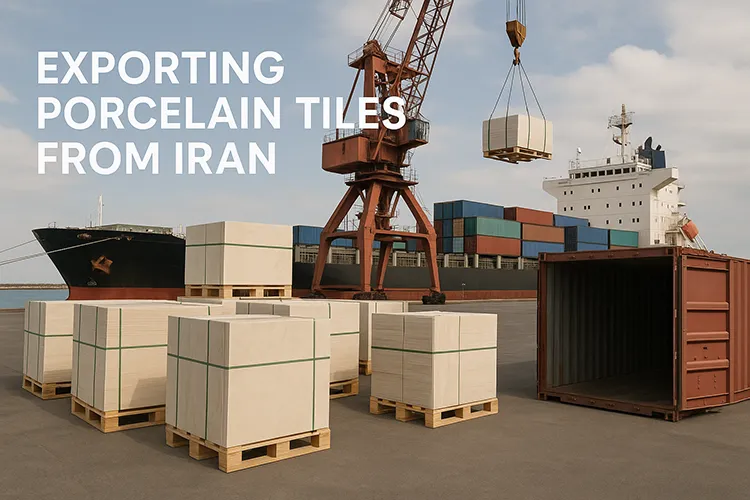
Introduction: Exporting Porcelain Tiles from Iran has seen significant growth, especially to neighboring countries, Central Asia, Europe, and Africa. Today, Iran’s porcelain industry plays a key role in the country’s non-oil economy. It thrives by leveraging abundant natural resources, a skilled workforce, and continuous technological innovation, positioning itself as a competitive player in the global market.
An Overview of Iran’s Porcelain Tile Industry
The word ceramic originates from the Greek word Keramos, meaning “fired clay materials” such as pottery, tiles, and porcelain. Ceramic materials are non-metallic and non-polymeric substances, and they come in various forms, including high-temperature insulators, porcelain ware, and more. In ceramic science, the term porcelain is commonly used to refer to fine china.
The term porcelain is derived from a type of Mediterranean sea mollusk known for its white, semi-translucent shell. The shell’s purity and clarity inspired the naming of this group of ceramic products. According to the common European definition, porcelain Is a dense, white ceramic material—either glazed or unglazed—used for various applications. This term encompasses a broad category of ceramics known for their high firing temperatures and durability. Exporting Porcelain Tiles from Iran has gained significant traction globally due to the high quality and diverse designs of Iranian porcelain products.
The porcelain tile industry in Iran is relatively modern compared to the country’s long-standing tradition in ceramic and tile manufacturing. Despite its recent emergence, it has quickly gained a prominent position in both domestic and export markets. The production of porcelain tiles in Iran began in the late 20th century when the need for more durable building materials with greater resistance to moisture, abrasion, and temperature fluctuations became increasingly evident.
With the introduction of advanced European technologies and the adoption of cutting-edge machinery, Iranian manufacturers began producing high-quality porcelain tiles in a wide variety of designs. This rapid development helped Iran become one of the leading producers of porcelain tiles in the region.
What Makes Porcelain Tiles Ideal for Export from Iran?
-
Aesthetic Appeal and Versatility
Porcelain tiles offer remarkable flexibility in design. They can replicate the look of traditional flooring materials such as marble, granite, wood, metal, bamboo, and cork. Visually, there is often no discernible difference between porcelain tile flooring and the natural materials they imitate. This makes porcelain an ideal choice for designers seeking aesthetics without compromising on functionality.
-
Durability
Porcelain tiles are considered the hardest type of tile available. Their dense and compact structure enables them to withstand significant environmental pressure, making them suitable even for commercial settings. Porcelain typically achieves a PEI (Porcelain Enamel Institute) rating of 5, indicating it is well-suited for high-traffic areas such as living rooms and areas exposed to heavy equipment.
-
Water Resistance
The high density of porcelain tile particles enhances their resistance to water penetration, outperforming traditional ceramic tiles in this aspect. This resistance is further improved by applying a molten glass glaze, which creates a waterproof barrier that bonds seamlessly to the surface.
-
Stain Resistance
Another notable benefit of porcelain floor tiles is their natural resistance to stains. Since liquids cannot easily penetrate the dense surface, common staining agents are effectively kept at bay. When a glazed finish is applied, the tile becomes even more impervious to discoloration, preserving its original look for many years.
-
Low Maintenance
Thanks to their waterproof and stain-resistant properties, porcelain tiles are easy to maintain. Spills can be wiped away with a damp cloth, and routine sweeping helps to keep dust off the glazed surface. Occasional mopping with a mild soap and water solution also helps sanitize the area and preserve tile quality.
-
Fire Resistance
Porcelain does not burn under normal conditions. In case of fire, it helps to limit and slow the spread of flames, making it a safe flooring option for residential and commercial spaces.
-
Durability and High Strength
With proper installation and regular maintenance, porcelain tiles can last for decades. This long lifespan reduces the need for frequent replacements, making it a cost-effective flooring solution over time.
-
Repairability
Porcelain flooring is highly resistant to cracks and damage caused by physical impact. However, if damage does occur, individual tiles cannot always be removed and replaced easily. It is advisable to keep an extra box of matching tiles on hand during installation for future repairs.
Exporting Porcelain Tiles from Iran provides international buyers with access to high-quality, durable, and aesthetically versatile flooring solutions that meet global standards.
-
Unique Material Quality
Iranian porcelain tiles are known for their unique material quality, combining strength, durability, and refined aesthetics. Manufactured using high-quality raw materials and advanced technology, these tiles offer excellent resistance to water, stains, and wear. Their dense structure ensures long-lasting performance, making them ideal for both indoor and outdoor spaces.
Types of Porcelain Tiles for Exporting from Iran
-
Usage
Porcelain tiles come in a wide range of colors, patterns, shapes, and sizes, making them ideal for both floors and facades. Based on usage, they are mainly categorized into porcelain facade tiles and porcelain floor tiles.
- Facade porcelain tiles
Facade porcelain tiles must withstand varying weather conditions, offer color and design variety, and have a long lifespan. Thanks to modern dry installation systems, they are now suitable for high-rise buildings. These tiles are available in two main types: hollow-body (terracotta) and full-body porcelain tiles.
- Porcelain floor tiles
Porcelain floor tiles are known for their durability and quality, making them a popular choice in construction. However, when choosing a tile for outdoor or high-traffic commercial areas, surface finish is crucial. High-gloss polished tiles, while visually stunning, can become slippery or lose their shine over time.
-
structural perspective
From a structural perspective, porcelain tiles come in glazed and unglazed versions. Glazed tiles feature a thin, hard glass-like coating that enhances their aesthetic. Some polished tiles may be glazed or unglazed, depending on the finish. Full-body porcelain tiles have uniform color throughout the body, minimizing visible damage if chipped.
Installation styles also affect aesthetics. One striking example is book-matched porcelain tiles, which align patterns symmetrically to create art-like surfaces.
-
Surface finishes
- Polished: glossy, with or without glaze.
- Matte: slip-resistant and durable.
- Semi-polished: balanced between shine and resistance.
- Textured: for added depth and slip resistance.
Porcelain tiles are versatile and used in residential, commercial, industrial, and public spaces. They comply with European standard EN 14411 and are available in a variety of large-format sizes.
Exporting Porcelain Tiles from Iran opens up access to innovative, durable, and versatile tile solutions tailored to global architectural needs.
Top Export Markets for Porcelain Tiles
Iranian tiles are popular in the global market due to their high quality and beautiful designs. Some of the key destinations for the export of Iranian tiles include:
- Iraq
- Afghanistan
- Turkey
- Georgia
- Pakistan
- Russia
- United Arab Emirates
- Qatar
- Kuwait
- Oman
- China
- Nigeria
This list of destination countries is not exhaustive. The market for Iranian tiles is expanding, and due to Iran’s favorable geographic location, there are no significant barriers to exporting through land, air, or sea routes.
Exporting Porcelain Tiles from Iran provides global markets with access to high-quality tiles that enhance the aesthetic value of any space, making them a preferred choice for construction projects worldwide.
Packaging and Logistics of Exporting Porcelain Tiles
When exporting porcelain tiles from Iran, ensuring their arrival in excellent condition requires meticulous attention to packaging and logistics. This process involves strategic planning that focuses on protective packaging and efficient transportation methods to maintain the integrity of the tiles.
-
Protective Packaging for Fragile Tiles
Despite the high durability of porcelain tiles, they can be fragile during transportation. To prevent damage, manufacturers in Iran use high-quality packaging materials such as foam, bubble wrap, and sturdy wooden crates. Each tile is carefully packed to protect it from external pressure or impacts. Protective corners and dividers are added to prevent tiles from coming into contact with each other, minimizing the risk of breakage or cracking. Additionally, boxes are clearly labeled to ensure proper handling throughout the export process.
-
Efficient Transportation and Distribution Methods
Efficient transportation and distribution are crucial for the smooth export of porcelain tiles. In Iran, logistics companies offer various transportation options, including sea, air, and land transport, depending on the destination and urgency. Sea transport is the preferred method for larger shipments, where containers are loaded in a way that optimizes space and prevents shifting during transit. For smaller, time-sensitive orders, air transport is utilized. Upon arrival at the destination port, an organized distribution network ensures timely delivery to retailers or end customers.
Exporting Porcelain Tiles from Iran relies on reliable packaging and logistics strategies to meet international demand while maintaining the quality and safety of the tiles throughout the shipping process.
Iranian Porcelain Tile Export Standards
The technical requirements and specifications for PEMA porcelain tiles are outlined in the European standard EN 14411, and these tiles are produced by this standard. These porcelain tiles are available in various sizes, including 320×160, 280×120, 160×80, 120×120, 120×60, 100×100, 120×20, and 80×80 centimeters.
Exporting Porcelain Tiles from Iran ensures that these high-quality tiles meet international standards, providing a reliable product for diverse architectural and construction applications.
-
Thickness & Durability Tests
The highly compact and dense structure of porcelain tiles results in the highest bending strength among floor and wall tiles, making it one of the key technical features of porcelain. The typical thickness of a porcelain tile is around 8-10 millimeters. However, in special cases, the thickness may increase up to 15-20 millimeters. Their high bending strength ensures the mechanical performance of the product, making these tiles suitable for installation in areas subjected to mechanical stress, such as floors in homes, workshops, and laboratories. The average bending strength of porcelain tiles should exceed a specific threshold.
Depth resistance to abrasion is determined based on testing methods (EN102, EN154), considering that until 1995, the polishing of tiles was considered a valuable feature and all-porcelain tiles were unglazed. Therefore, surface abrasion resistance is determined based on the relevant testing method.
Exporting Porcelain Tiles from Iran ensures that these high-quality tiles meet the mechanical and durability standards required for diverse applications.
-
Water Absorption Levels
Porcelain tiles have a water absorption rate of less than 0.5%, and in many cases, it is as low as 0.1%. As a result, they are considered the most compact ceramic products for use on floors and walls. Currently, their physical and mechanical properties surpass those of other tiles with higher porosity. The low water absorption of these tiles is attributed to their highly vitreous surface, which indicates the formation of a significant glass phase during the high-temperature firing process.
Exporting Porcelain Tiles from Iran guarantees that these tiles, with their superior water resistance and strength, are suitable for a wide range of demanding applications in both residential and commercial spaces.
-
Grading of Porcelain Tiles
Porcelain tiles are classified into four grades based on surface quality, by the national standards of Iran. Manufacturers are required to package and sell porcelain tiles only within these categories. According to Iran’s National Standard No. 2-9169, ceramic defects are classified into 13 types, including body cracks, glaze cracks, lack of glaze, uneven surface, pinhole defects, un-melted glaze, stains, under-glaze defects, decorative issues, chipping, blistering, edge irregularities, and core defects.
Here is how porcelain tiles are graded based on these criteria:
- Grade 1 Porcelain Tile
If no defects from the 13 surface quality issues (except for body cracks, glaze cracks, and corner or edge chipping) are visible from a distance of one meter, the tile is considered Grade 1.
- Grade 2 Porcelain Tile
If the porcelain tile has fewer than three defects from the 13 surface quality issues visible from one meter (except for body cracks, glaze cracks, and corner or edge chipping), the tile is considered Grade 2, provided these defects are not visible from a distance of two meters.
- Grade 3 Porcelain Tile
If the porcelain tile has fewer than three defects from the 13 surface quality issues visible from two meters (except for body cracks, glaze cracks, and corner or edge chipping), the tile is considered Grade 3.
- Grade 4 Porcelain Tile
Tiles that do not meet the surface quality standards of Grade 1, 2, or 3 are considered Grade 4 porcelain tiles.
Exporting Porcelain Tiles from Iran follows these strict standards to ensure that high-quality porcelain products reach international markets.


