
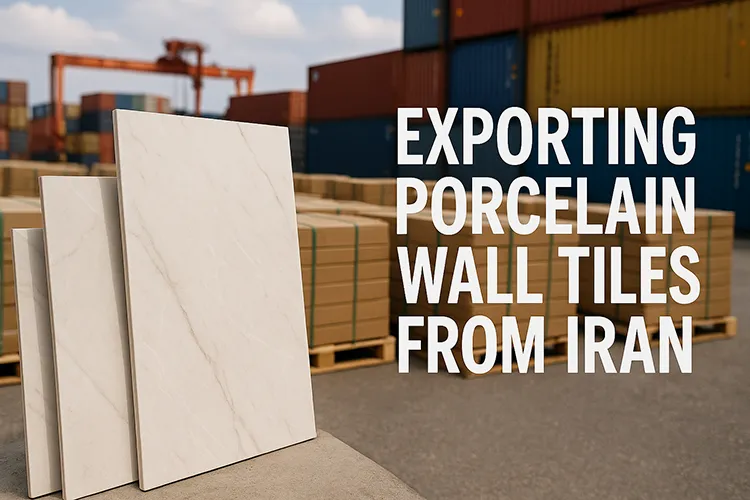
Introduction: Exporting porcelain wall tiles from Iran is a process that showcases their distinctive qualities, particularly their extremely low porosity. This characteristic significantly impacts their performance and long-term durability. The low porosity is achieved through a high-temperature firing process, which creates a uniform structure, strengthening particle cohesion and eliminating internal voids. As a result, the tile becomes dense, durable, and impermeable.
In the firing stages, especially for multi-component porcelain tiles, a higher amount of molten phase is produced than other ceramics. This molten material, due to surface tension, flows into the smallest pores, sealing them completely. The outcome is a product that not only has a smooth and uniform appearance but also offers exceptional resistance to external elements such as moisture, chemicals, and temperature fluctuations.
Stay with us as we guide you through all aspects of exporting porcelain wall tiles from Iran.
Advantages of Iranian Porcelain Wall Tiles
Exporting Porcelain Wall tiles from Iran offers international buyers access to these high-performance, low-porosity products that meet both aesthetic and technical demands in modern architectural design.
Porcelain wall tiles, made with advanced technologies and high-quality materials, offer exceptional technical features, making them ideal for high-end, durable architectural projects in both residential and commercial design.
1. High Scratch Resistance
Thanks to their dense and hard surface, porcelain wall tiles provide exceptional resistance to scratching and surface wear, even under heavy foot traffic or frequent contact with tools and fixtures. This makes them suitable for high-use areas where walls are frequently touched, such as behind sinks, hallways, or commercial environments.
2. Outstanding Mechanical Strength
Although designed for wall application, porcelain tiles exhibit superior compressive and flexural strength compared to similar materials. This structural integrity enables them to withstand sudden impacts and localized pressure without cracking or breaking over time.
3. Extremely Low Water Absorption
With a water absorption rate of less than 0.5%, porcelain tiles are nearly impermeable. This feature helps prevent the buildup of mold and mildew, eliminates issues related to moisture discoloration, and contributes to a cleaner, more hygienic, and longer-lasting surface.
4. Frost Resistance
In regions with harsh winters, external walls or semi-exposed areas may face structural damage due to freezing conditions. However, porcelain wall tiles do not absorb moisture, eliminating the risk of expansion and cracking due to frost. This makes them highly reliable for cold climates.
5. Chemical Resistance and Easy Cleaning
These tiles are highly resistant to harsh cleaning agents, oils, inks, and even mild acids. Their surfaces are easy to clean and maintain without the risk of surface damage or discoloration. This property is especially valuable in kitchens, laboratories, and bathrooms where hygiene and cleanliness are essential.
6. Stylish Finishes
Porcelain wall tiles combine technical superiority with visual appeal. Presented in diverse design options, textures, and colors, they can suit any interior style, from minimalist to classic. These tiles replicate natural textures like marble, concrete, and wood, offering a luxurious look while maintaining durability and hygiene. This blend of aesthetics and performance makes them a top choice for architects and interior designers.
Exporting Porcelain Wall tiles from Iran ensures access to a product that meets the strictest international standards in durability, performance, and design—making it an excellent choice for demanding global markets.
Popular Sizes and Finishes
-
Types of Porcelain Wall Tiles Based on Sizes
Porcelain wall tiles are produced and Available in a wide range of sizes to meet the diverse needs of architecture and interior design. The choice of tile size directly impacts the final appearance of the space, influencing its perceived openness, organization, and even luxury.
Among the available sizes, rectangular and square formats are the most commonly used. For example, the 30×60 cm size is a popular choice for kitchens and bathrooms due to its easy installation and ability to highlight textures and patterns effectively. Larger sizes, such as 60×120 cm or even bigger, are often used for spacious areas like living room walls, lobbies, or commercial projects to create a seamless and luxurious look with minimal grout lines.
For smaller spaces, tiles with dimensions of 20×20 cm or 25×40 cm are ideal as they better suit the scale of the room and help avoid visual clutter.
The availability of porcelain wall tiles in various sizes allows interior designers to choose the perfect option based on the style of decor, lighting conditions, and the Dimensions of the area, ensuring a harmonious and aesthetically pleasing result.
Exporting Porcelain Wall tiles from Iran makes it possible for global markets to access a diverse range of sizes, offering tailored solutions for any project, large or small.
-
Types of Porcelain Wall Tiles Based on Surface Finish
Porcelain wall tiles are classified into four categories based on their surface finish, each with distinct features and applications. Choosing the right surface type greatly influences the aesthetic appeal, performance, and durability of tiles in various spaces.
- Polished Porcelain Tiles
Polished porcelain tiles are created through a polishing process that results in a glossy surface. These tiles can be offered with or without a glaze. If the tile is glazed, it is referred to as a glazed polished porcelain tile; if unglazed, it is simply called a polished porcelain tile. These tiles are ideal for low-traffic areas such as private offices, boutiques, and residential spaces. Their glossy finish adds a luxurious touch to the space, but they may require more maintenance in high-traffic areas.
- Matte Porcelain Tiles
Matte porcelain tiles, known for their slip-resistant surface and high friction coefficient, are well-suited for high-traffic spaces. These tiles are easy to clean and highly resistant to wear, making them perfect for commercial spaces, bathrooms, and outdoor facades. Their matte surface adds a natural and understated elegance to the environment.
- Semi-Polished Porcelain Tiles (Wire-Polished)
Semi-polished porcelain tiles, Commonly called wire-polished, have a partially polished surface that offers a subtle shine, reminiscent of fully polished ceramics while maintaining high abrasion resistance. This makes them versatile for indoor and outdoor use, such as on living room walls, entryways, and facades.
- Textured Porcelain Tiles
Textured porcelain tiles feature raised patterns and designs that not only enhance their aesthetic appeal but also provide functional benefits. These tiles can add a unique and attractive look to indoor and outdoor spaces. They are commonly used on pool walls, outdoor areas, decorative spaces, and facades, where their textured surface provides excellent resistance to slip and wear.
Exporting Porcelain Wall tiles from Iran provides global markets with a wide range of options in porcelain finishes, offering tailored solutions to meet functional and decorative needs in various architectural projects.
Applications in Residential & Commercial Projects
Porcelain wall tiles, due to their features such as high density, extremely low water absorption, and excellent resistance to wear and impact, are highly suitable for use in both interior and exterior spaces. These qualities make porcelain tiles a versatile choice for various environments with diverse needs. Below are some common applications of porcelain wall tiles:
- Residential Buildings
Porcelain wall tiles are especially popular in kitchens, bathrooms, and restrooms, particularly in areas exposed to moisture and constant water contact. Additionally, their use in living rooms and hallways adds a luxurious, modern touch to the space while offering easy maintenance.
- Office and Commercial Buildings
In offices, conference rooms, and commercial centers, porcelain tiles are widely used for interior walls and facades. Given their high resistance to wear and impact, they are ideal for high-traffic areas and provide a stylish, durable surface.
- Hospitals
Porcelain tiles, due to their antibacterial and stain-resistant properties, are commonly used in hospitals and healthcare centers. Patient rooms, operating theaters, and other medical spaces require tiles that are easy to clean and resistant to moisture and chemicals.
- Factories and Industrial Centers
In factories and industrial centers, porcelain wall tiles are used for interior and exterior walls due to their high resistance to wear and chemical factors. They are especially effective in environments exposed to pollutants and chemicals.
- Parking Lots, Stairs, and Counters
Porcelain wall tiles are extensively used in parking lots, stairs, and counters due to their high resistance to pressure and wear. These tiles easily withstand physical damage and moisture, turning high-traffic areas into safe and elegant spaces.
- Building Interiors and Exteriors
Porcelain tiles are commonly used for both interior and exterior facades of buildings, especially in areas that require durability and aesthetic appeal. These tiles, besides their beautiful appearance, have a long lifespan due to their resistance to harsh environmental conditions.
- Outdoor Spaces
Due to their resistance to various weather conditions, porcelain wall tiles are perfect for outdoor spaces such as yards and water features. These tiles withstand sunlight, rain, and snow, and require minimal maintenance.
- Terminals and Airports
In terminals, airports, and public transportation stations—areas with high foot traffic—porcelain tiles are used as wall coverings and sometimes even for flooring. These tiles offer high resistance to heavy traffic and, with their stylish look, enhance the aesthetic quality of these spaces.
- Educational and Sports Buildings
Porcelain wall tiles are used in schools, universities, and sports centers, particularly in high-traffic rooms and hallways. Their resistance to wear and ease of cleaning make them ideal for creating hygienic and durable environments that can withstand potential damage.
Exporting Porcelain Wall tiles from Iran brings this versatile, high-performance material to international markets, meeting the needs of various sectors, from residential to industrial.
Export Requirements for Wall Tiles
-
HS Codes
Porcelain wall tiles are typically classified under tariff codes 6907 and 6908 in the customs tariff system. These codes are specifically defined for ceramic and tile products, aiding in the identification and classification of these items during export and import procedures.
-
Pricing of Export Products
When pricing porcelain wall tiles for export, it is important to note that the pricing process differs from domestic sales. Manufacturers of porcelain tiles for export generally use one or two fixed prices for all their products. This pricing strategy helps producers and exporters estimate their costs and prices in international markets more effectively, ensuring they stay competitive.
-
Challenges in Pricing
One of the major concerns for porcelain tile producers and exporters in Iran is the price discrepancy between domestic and export prices. This price difference is influenced by factors such as production costs, currency fluctuations, customs tariffs, and the demand of target markets. Manufacturers Must Thoroughly develop their pricing strategies to attract foreign customers while also covering domestic costs.
Exporting Porcelain Wall tiles from Iran helps to ensure these high-quality products reach international markets, offering consistent pricing strategies that meet the needs of global customers.
-
Export Documentation
Exporting porcelain wall tiles to international markets requires The purchase of legal and commercial documents that facilitate the shipping process and business transactions. These documents ensure that the products comply with international standards and customs regulations. Below are some of the most important documents needed for the export of tiles and ceramics:
- Export License
The first step in exporting porcelain wall tiles is obtaining an export license from the Ministry of Industry, Mine, and Trade. This license is crucial for establishing export activities and using special export facilities, confirming that the exporter is authorized to carry out the export of goods.
- Sales Invoice
The sales invoice is one of the key commercial documents and must include precise and complete information about the goods, the exporting company, the recipient, pricing, and payment terms. This invoice is typically prepared in the destination language (usually English) and Acts as the primary document in commercial transactions between the exporter and the buyer.
- Certificate of Origin
The certificate of origin is another essential document for exporting porcelain wall tiles. It confirms that the goods are shipped from the exporting country and aids in determining customs duties and tariffs. This certificate is usually issued by the Chamber of Commerce or customs authorities.
- Valid Quality Certificate
Exporting porcelain wall tiles requires valid quality certificates. These certificates are issued by standard organizations and reputable laboratories, confirming that the products meet international standards and safety regulations.
- Bill of Lading
The bill of lading, or shipment seal, is another vital document that includes information about the shipping vessel, the type and number of goods, cargo volume and weight, and the names of the exporting company and recipient. The bill of lading serves as an official confirmation of the goods’ shipment from the exporting country to the final destination and is used as a legal document in customs and transit procedures.
- Financial Documents
Exporting porcelain wall tiles requires financial documents such as invoices, shipping papers, remittance receipts, and payment records. All transactions and settlements must be accurately recorded, and the relevant documents should be available for the export and import processes.
Exporting Porcelain Wall tiles from Iran requires careful attention to these legal and commercial documents to ensure smooth international trade and compliance with regulations.


