Introduction: Exporting ceramic wall tiles is a rapidly growing sector for Iranian traders. With a long history of success and innovation, Iran’s ceramic tiles industry continues to expand, capturing a significant share of international markets due to the exceptional quality of its products.
Iran’s ceramic exports are widely recognized in neighboring countries such as Iraq, Turkey, and Afghanistan. Notable manufacturers like us, a leader in the industry, have established a strong and enduring presence in these regions.
Join us as we explore the key aspects of ceramic wall tiles exports, highlighting Iran’s growing influence in the global market.
Features of Ceramic Wall Tiles for Export from Iran
Ceramic wall tiles intended for export are widely favored in homes and commercial settings due to their long-lasting nature, adaptability, and low maintenance requirements. Their strong resistance to moisture, stains, and daily wear adds to their appeal, and they come in an extensive range of colors, textures, and designs to complement different aesthetic preferences.
- Material Composition
Wall ceramic tiles are made from clay, metals, colorants, and water. These components are mixed and fired at high temperatures to form the final product.
- Sizes and Designs
Wall tiles are manufactured in various sizes, patterns, and colors. This variety allows you to enhance the interior design of different spaces according to your preferences.
- Moisture Resistance
One of the main advantages of ceramic wall tiles is their moisture resistance. This feature makes them suitable for bathrooms, kitchens, and other high-humidity areas.
- Easy Maintenance and Cleaning
Thanks to their smooth and non-porous surface, wall tiles are easy to maintain and clean. Additionally, many ceramic tiles are designed to prevent the growth of bacteria and mold.
Applications of Ceramic Wall Tiles in Different Environments
Ceramic wall tiles are specially crafted for use on vertical surfaces and are generally lighter and slimmer in relation to floor tiles. This design not only simplifies the installation process but also makes them ideal for adding visual appeal through stylish backsplashes or feature walls in interior spaces.
Ceramic wall tiles offer remarkable adaptability, making them suitable for a diverse range of spaces. Below are some of their most common uses in both residential and commercial environments, as well as outdoor areas:
-
Home Environments
- Kitchens
In kitchen areas, ceramic wall tiles are favored for their ability to resist moisture and for how easily they can be cleaned. They are ideal for use behind counters and stoves, serving as a protective and decorative backsplash that shields walls from grease, water, and food splashes.
- Bathrooms
Because of their excellent resistance to humidity and water, ceramic wall tiles are a go-to choice for bathrooms. They are commonly installed on shower walls and surrounding surfaces, where they offer both practicality and visual appeal.
- Living Areas
While more common on floors, ceramic wall tiles are increasingly being used in living spaces to create accent walls or fireplace surrounds, adding texture and elegance without compromising on durability.
-
Commercial Spaces
- Restaurants
Ceramic wall tiles are practical in both the front and back areas of restaurants. In kitchens, they simplify cleaning and hygiene maintenance, while in dining spaces, they contribute to the overall aesthetic and are easy to maintain.
- Hotels
From guest room bathrooms to lobby feature walls, ceramic wall tiles combine sophistication with long-lasting performance, making them ideal for high-traffic, design-conscious settings.
- Office Buildings
In professional environments, ceramic wall tiles are often used in entryways and washrooms. They offer a polished, modern look while standing up to constant use and requiring minimal upkeep.
-
Outdoor Uses
- Exterior Walls
Certain ceramic wall tiles are designed for exterior cladding, adding character and style to building facades while protecting the structure from weather elements.
- Patios and Pool Areas
While primarily used indoors, some ceramic wall tiles are suitable for semi-outdoor applications such as patio walls or poolside surfaces, especially when weather- and slip-resistant varieties are chosen.
Standard Sizes for Ceramic Wall Tiles for export
The standard size of tiles is one of the most important factors to consider when purchasing tiles and ceramics for a building. It is just as important as the model, design, color, and brand when selecting this material.
When exporting ceramic wall tiles from Iran, it is crucial to comply with national and international standards to ensure quality and market acceptance.
Iran’s National Standard No. 25, titled “Ceramic Tiles: Definitions, Classification, Specifications, and Markings”, establishes the technical specifications, dimensions, and quality requirements for ceramic tiles produced domestically. This standard is crucial in ensuring that tiles meet the expected criteria for both local and international markets.
On the global stage, the ISO 13006 standard provides detailed technical specifications for ceramic tiles, making it essential for exporters aiming to ship products to many international markets.
Standard sizes for ceramic wall tiles generally include rectangular or square shapes, with typical dimensions such as 20×20 cm, 25×40 cm, 30×60 cm, and 40×80 cm. However, the selection of tile size should align with the preferences and requirements of the target market to maximize appeal.
In addition to adhering to technical standards, attention to packaging, labeling, and supplying quality certificates is essential. Proper packaging and clear labeling help protect the tiles during transport, while quality certificates reinforce the product’s reliability, boosting its competitiveness in global markets.
Shipping Ceramic Wall Tiles: Best Practices
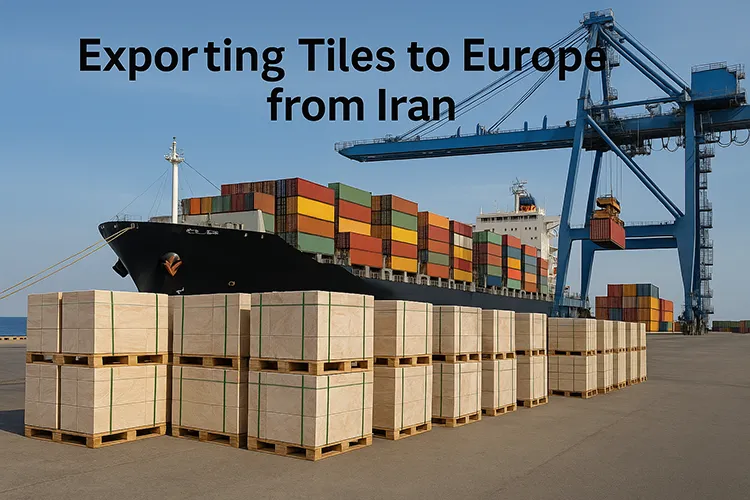
The international shipment of ceramic wall tiles from Iran is essential in supporting the country’s export market. Thanks to the outstanding quality and rapid development of Iran’s ceramic tile industry, these products have gained strong demand across global markets. As a result, ensuring safe and timely delivery to international destinations is of vital importance.
- Rail Freight for Ceramic Tiles
Transporting ceramic wall tiles by rail is a highly economical option for shipments exceeding 60 tons, particularly to countries like Turkmenistan, Tajikistan, Kazakhstan, Kyrgyzstan, and Russia. Rail freight is frequently utilized for exports to these regions due to its cost-efficiency.
This method not only supports the movement of large and heavy loads but also minimizes shipping time and overall costs. For more detailed information and to benefit from rail transport solutions, we offers specialized support and extensive experience in the field.
- Road Freight for Ceramic Tiles
For countries within closer proximity—such as Iraq, Pakistan, Turkmenistan, Armenia, Afghanistan, Azerbaijan, Georgia, Turkey, Syria, Russia, and Ukraine—road transportation remains a common and efficient choice. Additionally, for European destinations accessible by land through Turkey, this method proves practical.
Road freight provides quicker delivery and lower expenses while enabling the shipment of heavy and sizable tile loads with ease.
- Maritime Shipping of Ceramic Tiles
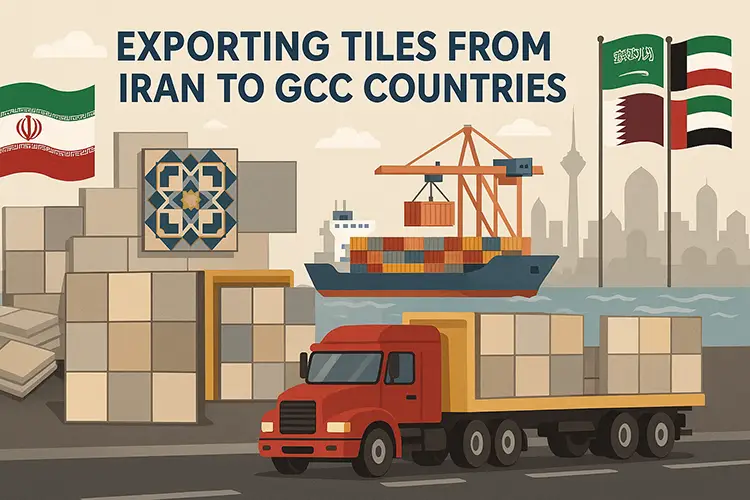
Sea transport is another major avenue for exporting ceramic wall tiles, especially to destinations such as Oman, Qatar, the UAE, Bahrain, Russia, and Kazakhstan. We oversee sea shipping through containerized and bulk methods to meet various needs.
Operating through key maritime routes in the Persian Gulf and the Caspian Sea, Shast Tile ensures dependable logistics solutions for overseas tile deliveries.
Sea freight remains a trusted and affordable way to handle large-scale exports to the mentioned countries, allowing businesses to efficiently transport their ceramic tile products.
With our comprehensive sea logistics services, you can count on a smooth and reliable shipping process, ensuring your tiles arrive at their international destinations without hassle.
Palletization and Wrapping Techniques for exporting ceramic wall tiles
Ensuring the safe delivery of ceramic wall tiles starts with proper packaging. To protect your products throughout transit, it’s essential to follow these key steps:
- Use Sturdy and Durable Boxes
Choose high-strength packaging materials such as thick cardboard or wooden boxes to ensure optimal protection against pressure, impact, and handling stress. The durability of these containers plays a critical role in preventing damage during transportation.
- Add Internal Protective Padding
Inside each box, incorporate shock-absorbing materials like foam sheets, bubble wrap, or compressed padding. These layers serve as a buffer, shielding the tiles from scratches, chips, or breakage during handling and transit.
- Include Separators Between Tiles
When stacking tiles, insert dividers—such as foam, plastic sheets, or kraft paper—between each layer. This spacing minimizes direct contact between tiles and reduces the risk of cracks or surface damage.
- Apply Handling Instructions
Label each package with clear handling instructions such as “Fragile” or “Handle with Care.” These warnings help alert transportation staff to treat the boxes with the necessary caution, preserving the quality of the contents.
- Ensure Proper Product Labeling
Each box should be labeled with essential information, including the company name, product type, quantity, dimensions, and weight. Accurate labeling not only supports smooth logistics operations but also helps avoid confusion during shipping and delivery.
By following these packaging guidelines, you can ensure your ceramic wall tiles reach their destination safely and in perfect condition—maintaining customer satisfaction and reducing the risk of product loss.
Pricing and Market Demand for Ceramic Wall Tiles
Factors Affecting Prices
When exporting ceramic tiles, several essential factors come into play in determining the final price. Understanding these elements helps manufacturers and buyers make informed decisions:
- Total Shipment Weight
One of the primary considerations in pricing is the total weight of the order. Heavier shipments naturally incur higher transportation and handling costs, which have a direct impact on the overall export price.
- Destination and Mode of Transport
The location of the receiving country and the chosen shipping method—whether by land or sea—significantly affect pricing. Each route and mode of transport carries its own cost implications, customs regulations, and transit times, all of which are factored into the final quote.
- Tile Quality and Grade
The quality classification of the ceramic tiles is a critical factor in determining value. Higher-grade tiles, which offer superior durability, finish, and design consistency, command higher prices due to their enhanced export potential and appeal in premium markets.
- Market Demand and Customer Expectations
Ultimately, the prevailing market conditions and specific client requirements shape the final pricing structure. High demand or custom specifications may lead to price adjustments, especially in competitive or fast-moving markets.
Demand in International Markets
- Exporting Ceramic wall Tiles to Georgia
Georgia, located at the crossroads of Asia and Europe, between the Caspian Sea and the Black Sea, is a crucial destination for trade, particularly with its membership in the European Union and NATO. This geopolitical positioning enhances the significance of exports to Georgia.
Trade in ceramic tiles is one of the most profitable activities between Iran and Georgia. In 2017, the value of tile exports to Georgia was $8,449,728 million.
However, the share of tile exports to Georgia represents only 2.47% of Iran’s total tile exports, suggesting room for growth. With the recent removal of tariffs on exports to Georgia, many traders send goods to countries like the U.S. without customs duties, making it highly profitable.
- Exporting Ceramic wall Tiles to Iraq
Due to the shared border and similar culture, Iranian merchants have a significant presence in Iraq’s markets, making it one of the largest consumers of Iranian products. In 2017, Iran exported $247,039,104 worth of ceramic tiles to Iraq, ranking second after cement exports. The low customs duties make Iraq a favorable market for this trade.
- Exporting Ceramic wall Tiles to Russia
The Russian market is complex, requiring detailed research and consultation before entering. In 2017, only 0.06% of Iran’s ceramic tile exports were to Russia, valued at about $247,600. Despite lower imports, Russia remains one of the top global tile buyers.
- Exporting Ceramic wall Tiles to Afghanistan
Trade with Afghanistan is crucial due to cultural similarities and strong ties, providing opportunities to increase exports with proper knowledge and skills.
- Exporting Ceramic wall Tiles to Armenia
Iran is a key exporter to Armenia, with trade between the two countries reaching around $320 million. Ceramic tile exports to Armenia were valued at $2,808,208, accounting for 0.83% of Iran’s total ceramic exports.
- Exporting Ceramic wall Tiles to Turkey
Turkey offers significant export opportunities, especially with customs discounts. In recent years, the trade volume between Iran and Turkey has risen from $5.7 billion in 2009 to $18 billion in 2014, making it an essential market for ceramic tiles.